
EPFL at FPGA 2020
Seaside in Monterey County, California, will host the 28th ACM/SIGDA International Symposium on Field-Programmable Gate Arrays (FPGA) between February 23 and 25 this year. Recognized as the premier conference for advances in FPGA technology, the symposium draws research papers, tutorial papers on emerging applications and methodologies, and panel discussion proposals. Among the papers being presented at FPGA 2020 are several original submissions and a tutorial paper by computer scientists at EPFL, which comprise a very good representation at the prestigious global event.

James Larus appointed EPFL IRGC Academic Director
Since its establishment in 2016, the EPFL International Risk Governance Center (IRGC) has not only drawn attention to increasingly complex risks that affect society, but also developed mitigation strategies for perceived risks. Given its fundamental role in the risk governance framework at EPFL, the appointment of James Larus, Dean of the School of Computer and Communication Sciences, assumes great significance.
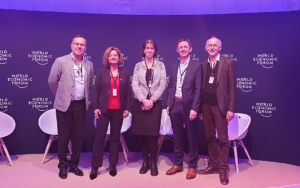
Alliance Announces the First Datacenter Efficiency Label
Academia and industry leaders have come together to form the Swiss Datacenter Efficiency Association (SDEA) and announce the first datacenter efficiency label that aims to decarbonize datacenters and significantly reduce energy consumption on data platforms and infrastructures. It has École Polytechnique Fédérale de Lausanne (EPFL) as one of its founding members.