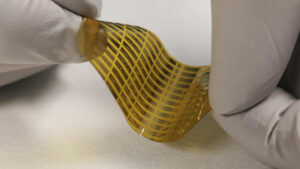
New Nanodevice to Bridge the Terahertz Gap
The nanodevice has the capacity to generate terahertz waves that are 20 times more powerful than any existing device today. That is a revolutionary advancement in the field because terahertz waves, despite their immense potential, are extremely difficult to achieve.
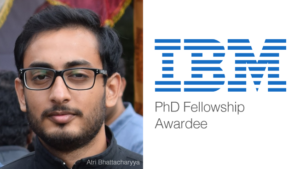
Atri Bhattacharyya Awarded IBM Ph.D. Fellowship
Atri joined EPFL in 2016 and completed his MS in Computer Science in 2018. Since then, he has worked at EPFL in the areas of microarchitectural security and design, and datacenter architectures. Through his years at EPFL, Atri has worked under the supervision of Prof. Babak Falsafi, Prof. Paolo Ienne, and Prof. M. Payer, completing many projects along the way.
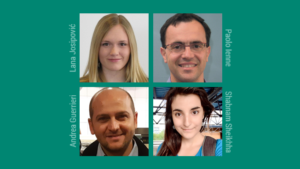
EPFL Researchers Win Best Paper Award at FPGA’20
Lana Josipović, Shabnam Sheikhha, Andrea Guerrieri, Paolo Ienne (all from EPFL, Processor Architecture Lab), and Jordi Cortadella (from Universitat Politècnica de Catalunya, Barcelona, Spain) are winners of the Best Paper Award at the 28th ACM/SIGDA International Symposium on Field-Programmable Gate Arrays (FPGA ’20), which concluded on February 25 at Seaside, California.