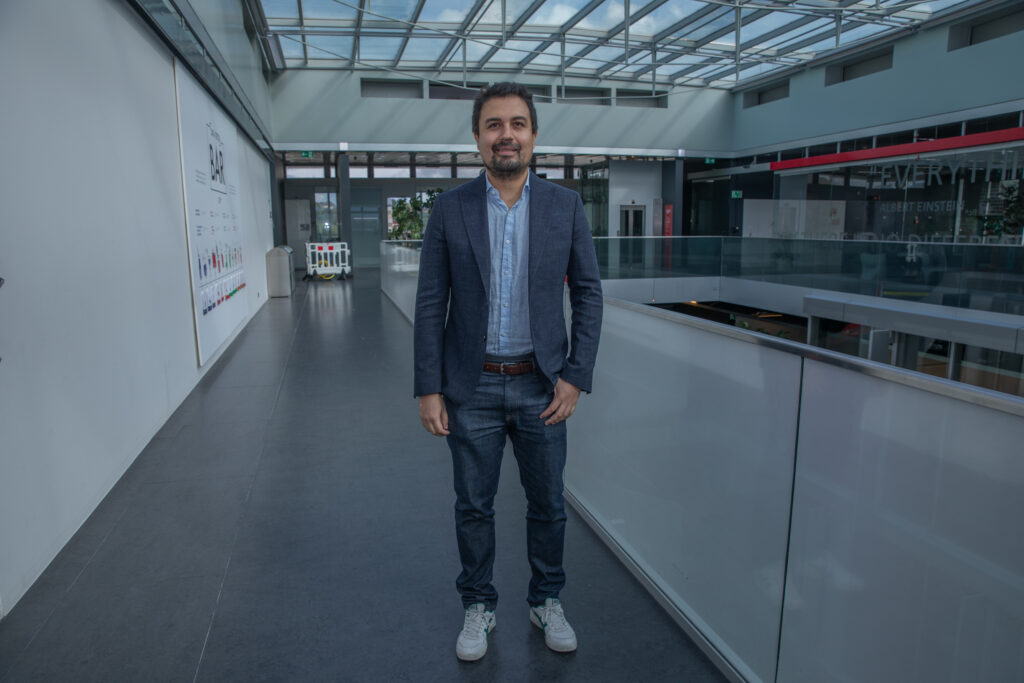
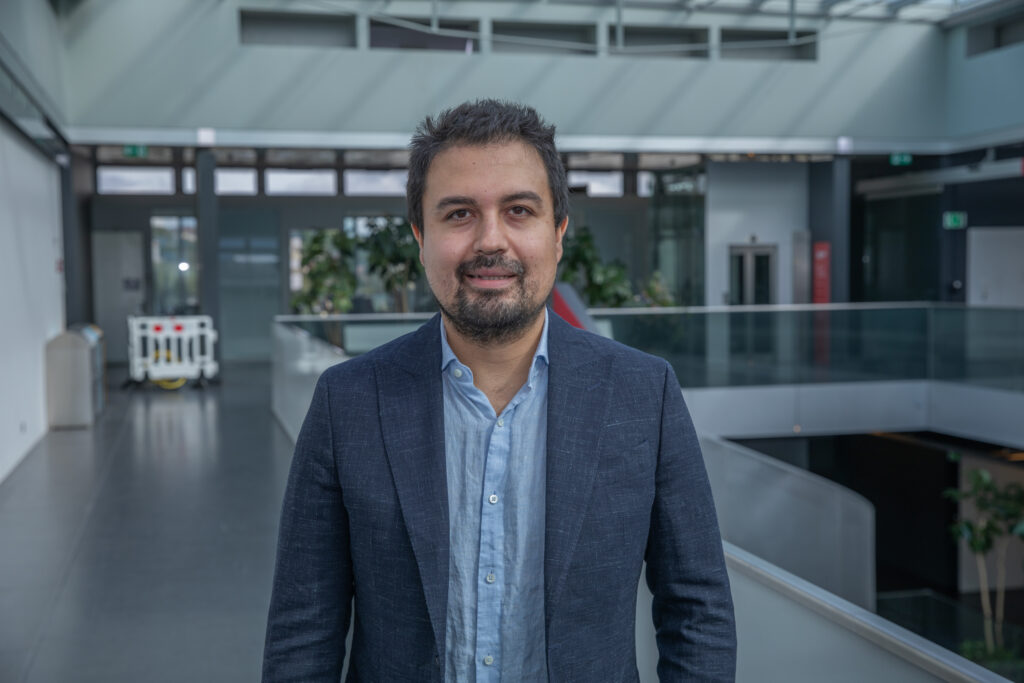
Fascinating presentation on the 25th September by Dr. Javier Picorel of Huawei, Zurich.
Many thanks to Dr. Picorel for his insights on the scaling of interconnects!

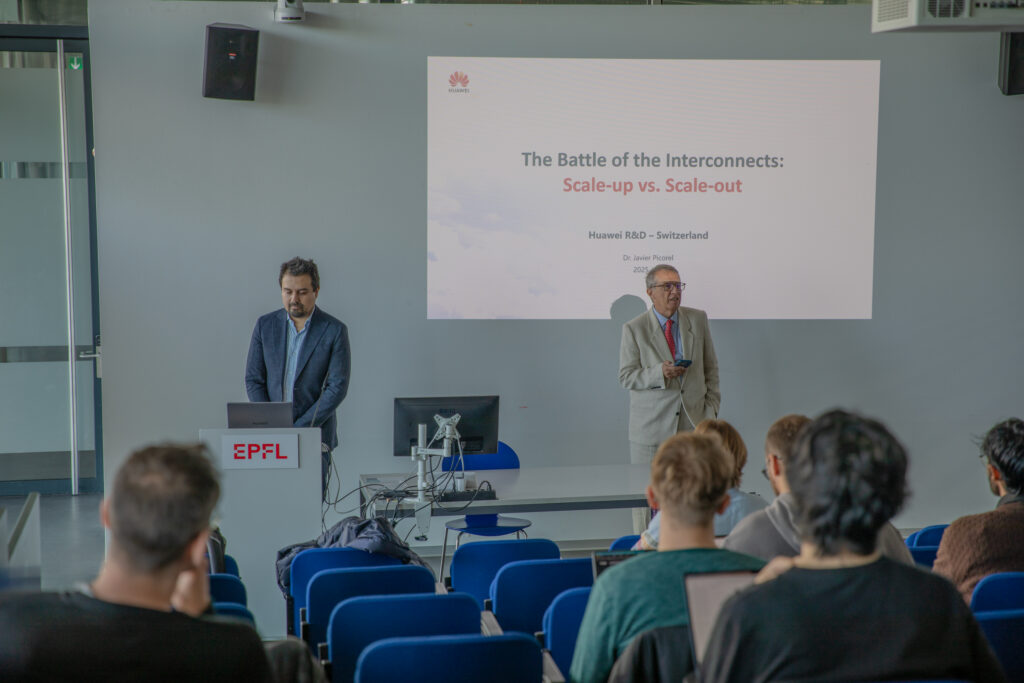
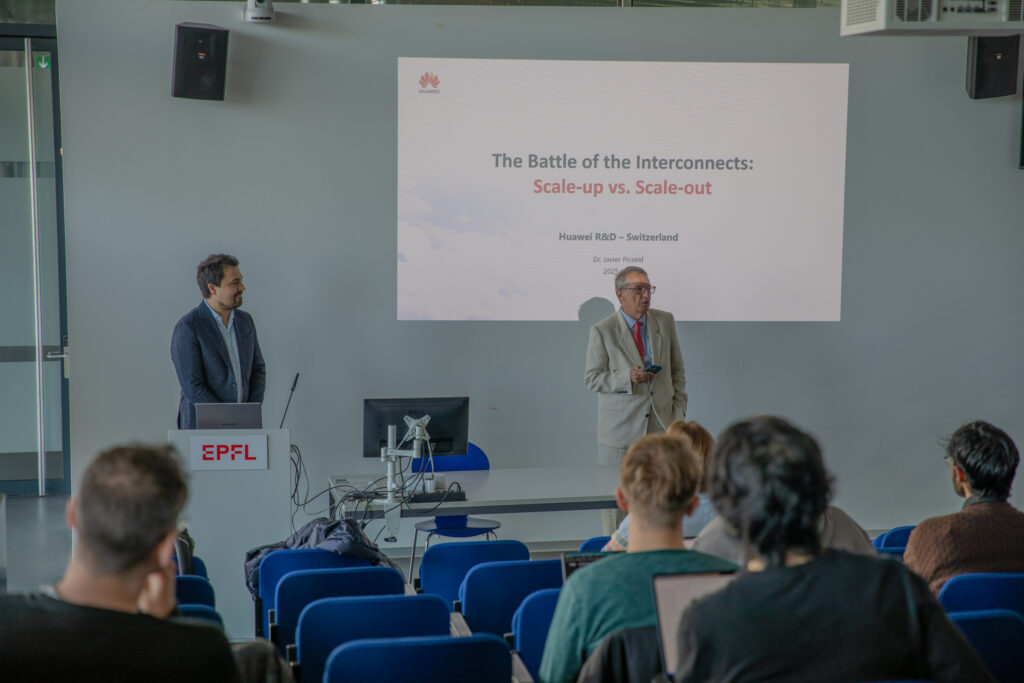
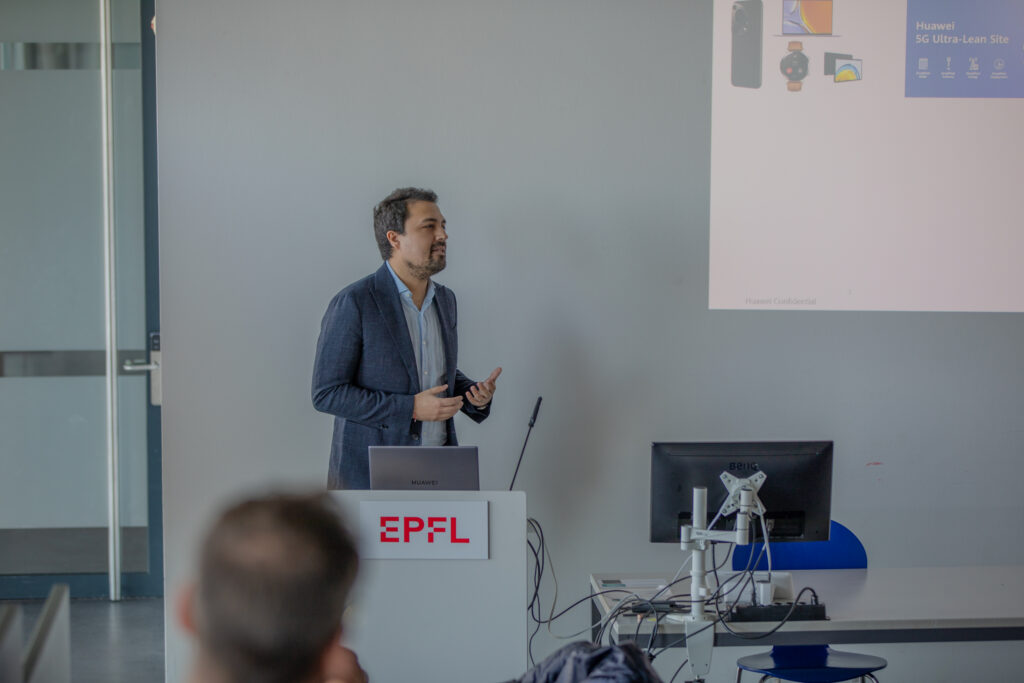
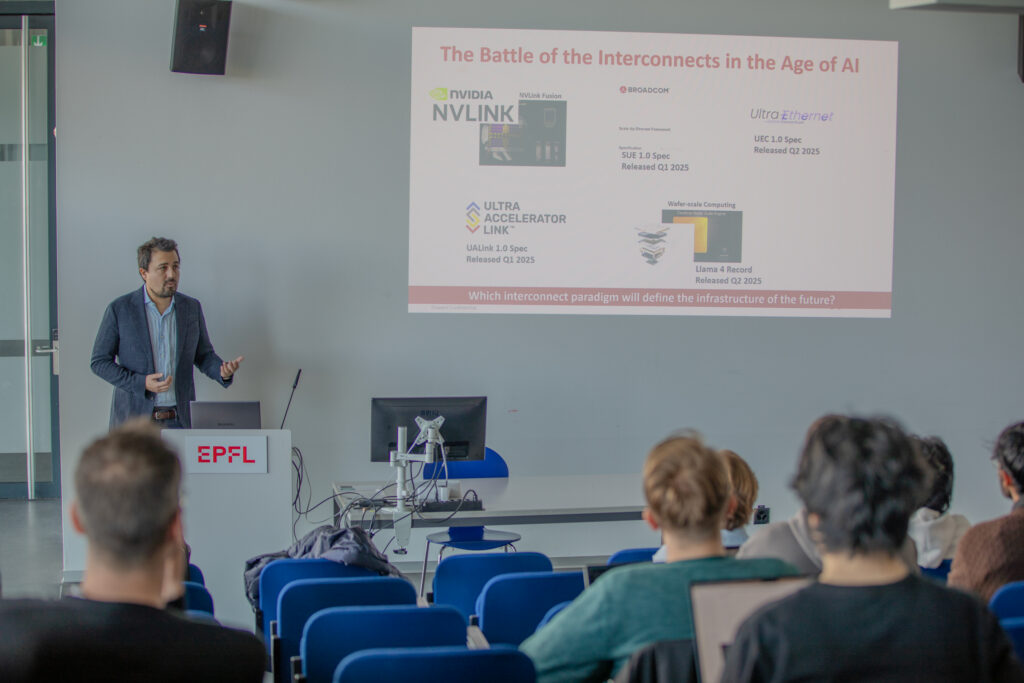

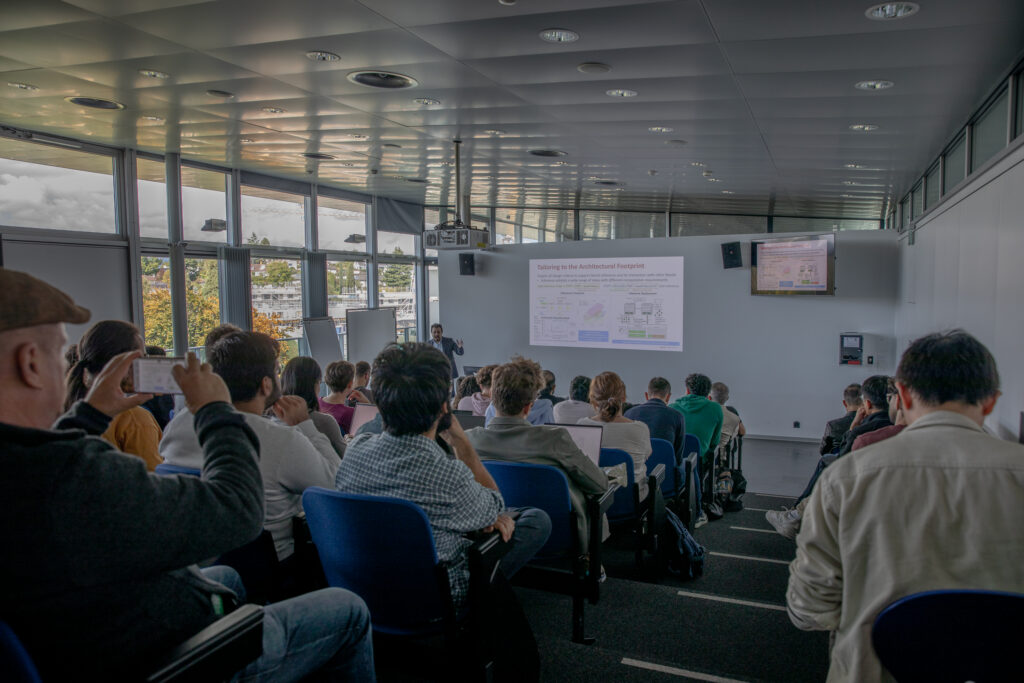
As traditional scale-up interconnects like NVIDIA’s NVLink and CXL extend beyond single nodes to span racks and clusters, and new scale-out networks such as UALink and Broadcom’s SUE emerge for low-latency scenarios, a competitive shift is underway in computer system design. Meanwhile, the slowdown of technology scaling is prompting exploration of extreme-scale integration, with innovations like Cerebras’ Wafer-Scale Engine and Tesla’s Dojo poised to further disrupt interconnect architectures. In this evolving landscape, the key question remains: which interconnect paradigm will define the future of computing?
Javier Picorel leads the Future Computer Fabrics team at Huawei’s Zurich Research Center, where he is driving the development of next-generation decomposable-native infrastructure. His team focuses on the tighter integration of applications, parallel programming models, networking, and compute to enable highly modular and elastic computing architectures. Javier's research spans a broad range of topics in computer architecture, computer systems, computer networks, and hardware-software co-design. He earned his Ph.D. in Computer Science from EPFL in 2017 and was honored with the Huawei Individual Gold Medal in 2021. In 2022, his work was prominently featured at Huawei Connect, the company’s flagship annual technology event.